
Dead and Alive - a long-term documentary project and reference archive dedicated to the visual documentation of death rituals around the world.
My interest in death did not begin as a project. It began through personal encounters with death and loss, and through an awareness of my own fear of death. Growing up in a culture where death is rarely spoken about, this fear was never openly addressed, but instead left unexamined.
In Denmark, death is often hidden. It is handled quietly, privately, and at a distance. Over time, I became aware that this silence was not universal. In many parts of the world, death is present, visible, and deeply integrated into social and cultural life.
This realisation became the starting point for Dead and Alive, an ongoing documentary archive dedicated to the visual documentation of death rituals around the world.
Why Death Rituals Exist
Death rituals exist in every known society. Whether expressed through burial, cremation, mourning ceremonies, exhumation rituals, or ancestor traditions, these practices serve fundamental human needs, and help individuals and communities to:
• acknowledge death as a transition
• create structure during grief
• maintain continuity between generations
• express belief systems and cosmologies
• define cultural identity through shared ritual
Death rituals are not only about the dead. They reflect how societies understand life, responsibility, memory, and belonging.
Another central motivation behind this project is to explore how death rituals often reflect life itself. Through a wide range of death and burial rituals, the work offers insight into how different cultures’ values, hopes, and beliefs are mirrored in their ideas about death and the afterlife — and how differently human societies care for and relate to their dead.
Funeral Rituals and Death Ceremonies Around the World
Dead and Alive documents funeral rituals from a wide range of cultural and religious contexts. Some ceremonies are private and restrained. Others are collective events involving entire communities over days, weeks, or even years.
Over more than fifteen years, I have documented death-related rituals in countries including Greenland, Haiti, Guatemala, Romania, Thailand, the Philippines, Nepal, India, Ghana, Israel, Finland, Indonesia, Madagascar, and Denmark.
The forms vary widely, but the function remains consistent: to help the living navigate loss and to situate death within a cultural framework.
Each series within the archive focuses on a specific ritual, tradition, or social context and contributes to a broader understanding of how death is handled across cultures.
What Happens After Death in Different Cultures
A central aspect of death rituals is belief. Not only in what happens to the body, but in what follows after death.
In some traditions, death marks a final separation. In others, it represents a transition into an ancestral or spiritual realm, where the dead continue to influence the living.
Many cultures maintain ongoing relationships with the deceased through remembrance rituals, offerings, periodic ceremonies, or physical encounters with the remains. These beliefs shape how the dead are treated, how mourning unfolds, and how death is integrated into everyday life.
Documenting Death as a Long-Term Study
Dead and Alive is a long-term documentary commitment based on sustained fieldwork, cultural access, and repeated engagement over time.
The archive is built slowly and continuously, with respect for local customs and an emphasis on context rather than spectacle.
The aim is to create a serious reference resource for those interested in:
• death rituals and funeral traditions
• cultural responses to mortality
• anthropological perspectives on death
• documentary photography as long-term study
New ritual series are added over time, expanding the archive and strengthening its role as a global reference hub.
This page serves as the central entry point to individual ritual series within Dead and Alive, including:
• Ma’nene Ceremony – Tana Toraja, Indonesia
• Lang Pa Cha Ritual – Thailand
• Figurative Coffins of the Ga People – Ghana
• Famadihana (Turning of the Bones) – Madagascar
• Living with the Dead – Manila North Cemetery, Philippines
About the photographer
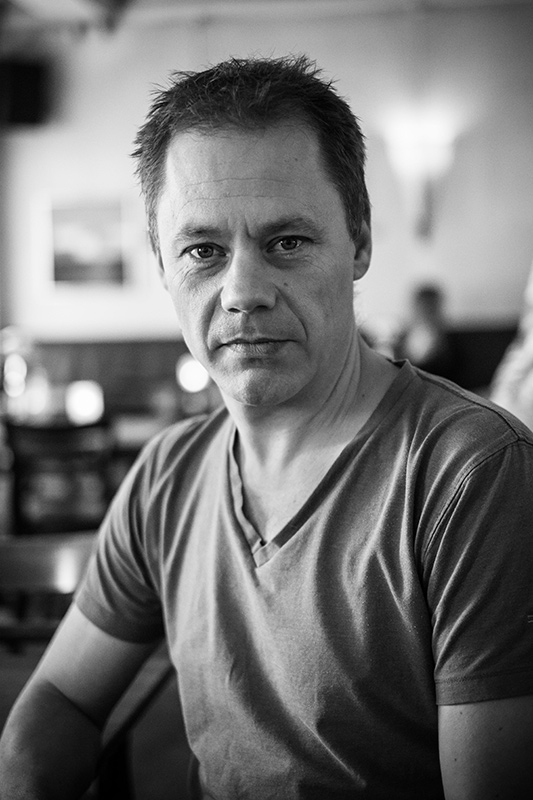
Klaus Bo is a Danish documentary photographer based in Copenhagen.
Since 2010/2011, his work has primarily focused on Dead and Alive, a long-term documentary project exploring death rituals and cultural relationships with death around the world. The project grew out of personal experiences with death and an awareness of how strongly death remains a cultural taboo in Denmark.
Over the years, Klaus has documented death rituals and death-related stories in countries including Greenland, Haiti, Guatemala, Mexico, Romania, Thailand, Philippines, Nepal, India, Ghana, Israel, Finland, Indonesia, Madagascar, and Denmark.
His work is based on long-term engagement, respect for local traditions, and a focus on context rather than spectacle.
Humboldt Forum “Living with Death” (book 2023)
Digital Foto (Denmark)
Stern Magazine (Germany) 12 pages
Annabelle (Switzerland) 14 pages
El Tiempo (Columbia)
New Philosopher Magazine (World) 14 pages
Fotografi (Norway)
Progresso Fotografico (Italy)
Publico (Portugal)
UD&SE (Danish Railway Magazine)
Politiken (Danish Daily)
+ various Danish newspapers and magazines
ONLINE
Frames (English)
Lens Culture (English)
Le Bizarreum (French)
National Geographic (English)
Publico (Portuguese)
Dance Past Sunset (Podcast - English)
JOIA Magazine (Spanish)
Fuji X Passion (English)
Exhibitions
Serdica (Sofia, Bulgaria)
Vangede Library (Denmark)
Dokk1 (Denmark)
Lydmar Hotel (Stockholm)
Frederikshavn Library (Denmark)
Liv&Død (Danish association on life and death)
Moesgaard Museum (Ethnografic museum, Denmark)
Leica Boutique (Copenhagen)
Copenhagen Photo Festival (Copenhagen)
Talks
Moesgaard Museum (Ethnografic museum, Denmark)
Lifting the Lid (international festival on death and dying)
Danish Red Cross
Dinner and Death (Resonansfestival at KU.BE)
Sankt Lukas Hospice
Liv&Død (Danish association on life and death)
Hospice Sjælland
Women Adventurers Club (Denmark)
Campus Carlsberg
City Campus - (Center for Health and Society)
Campus Emdrup - (Understand Death)
CONTESTS
Siena Awards
Liv&Død Prisen
Årets Pressefoto - Portrait, 2. pris
Picture Of the Year International - Award of Excellence
Årets Pressefoto - Reportage Abroad
TV/RADIO
2022 DR P1 + podcast. “Ubegribeligt” (incomprehensible).
2021 DR P2 (National Radio) - About the project and how we relate to death
2018 DR P3 (National Radio) - Interview about grief and death rituals
2018 DR P1 (National Radio) - Interview about the project and how we relate to death in Denmark
2017 TV2 (National Television) - About the project
2017 DR TV (National Television) - About various rituals
2017 A mirror on Life - Documentary by students at Grundtvig Højskole
2016 TV København - Interview about the project
Travels
2025 – Finland
2024 – Thailand
2023 – Mexico
2022 – Finland
2019 – Mexico
2019 – Israel
2018 – Indonesia
2017 – Indonesia
2017 – Denmark
2016 – The Philippines
2015 – Madagascar
2015 – Guatemala
2015 – Ghana
2014 – Nepal
2013 – Nepal
2013 – Romania (research)
2012 – Denmark, Anholt (research)
2012 – India (twice)
2011 – Haiti
2009 – Greenland